Hand-Cut Mosaic Feature Wall Ideas for Modern Interiors

A hand-cut mosaic feature wall is a picture assembled from individually shaped pieces of glass, stone, ceramic or other materials. The colour palette, size of the pieces and direction of the joints work together to create an image that can be read from across a room and explored in detail up close.
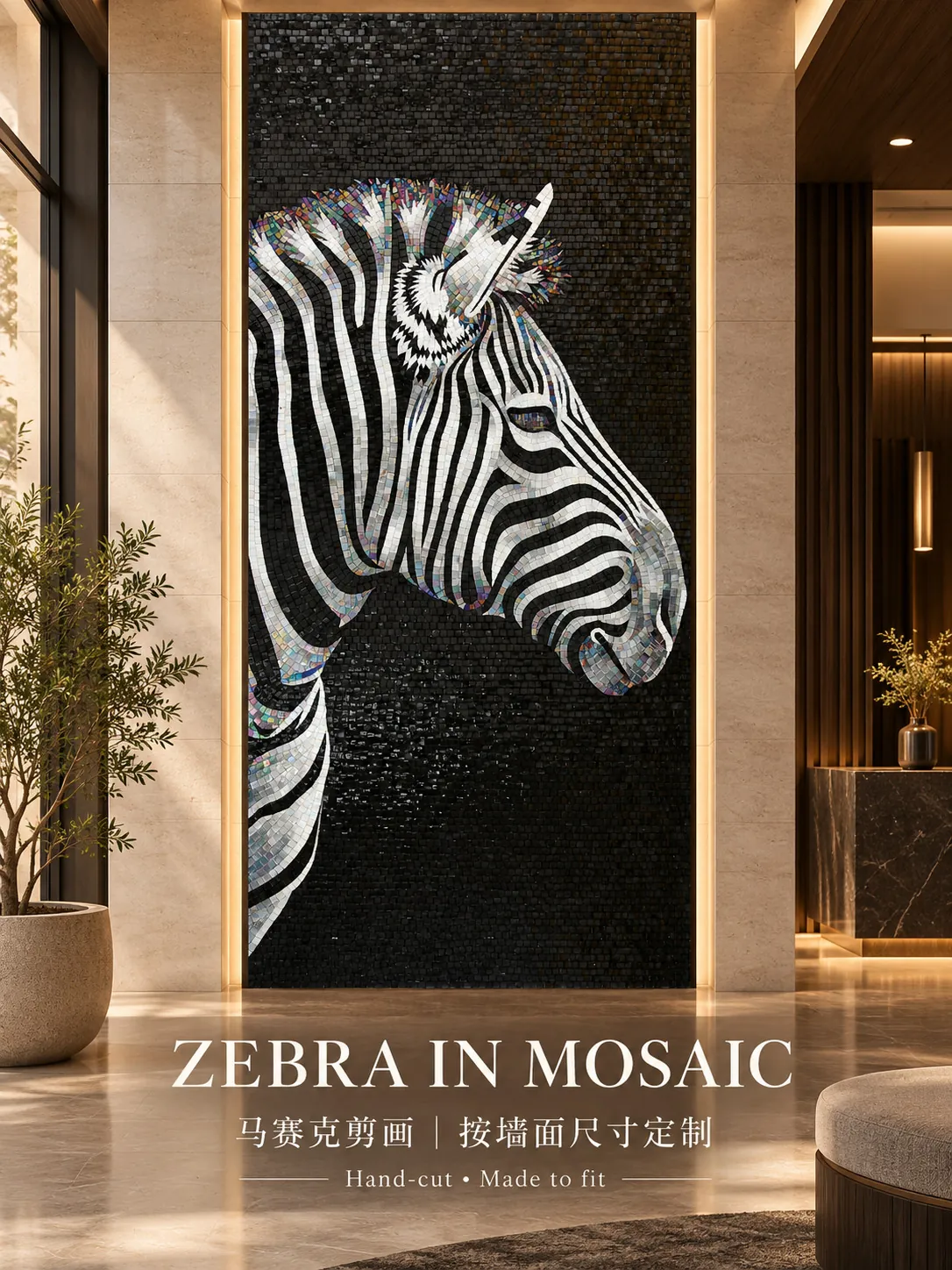
Three design concepts illustrate different approaches: a peacock among magnolia blossoms, a monochrome zebra and a white floral composition. The interior images are design visualisations. The separate detail photograph shows tesserae in another mosaic artwork.
A brief history of mosaic pictures
Mosaic makers have assembled images from small pieces for centuries. Greek pebble compositions and Roman tesserae developed into elaborate geometric and figurative surfaces. Later Byzantine and early Islamic architectural mosaics made extensive use of glass and richly coloured backgrounds. Today, artists continue to adapt these techniques to contemporary interiors. Read more in the Getty Museum’s introduction to Roman mosaics and the Metropolitan Museum of Art’s history of glass ornaments.
Three mosaic feature wall ideas
Peacock and magnolia for a quiet focal point
The first concept uses a deep blue peacock, pale blossoms and a light background. Its vertical composition gives the bird a clear silhouette, while the surrounding branches connect the artwork to the room’s natural tones. When planning a similar piece, consider how the background colour will look under daylight and evening lighting.
The opening image is a design visualisation of a peacock and magnolia mosaic.
A zebra design with strong contrast
Black-and-white stripes give a zebra mosaic an immediately recognisable pattern. The arrangement of the small pieces can follow the curves of the animal’s face and neck. A dark background strengthens the contrast, while small colour accents can add detail without competing with the main image.
White floral mosaic for a softer palette
A white floral design can use subtle tonal changes to distinguish petals from the background. In the example below, gold details provide contrast and a vertical composition fits the wall above a vanity. For any bathroom project, confirm the actual material, mounting and installation system for the intended moisture exposure.

Materials and the character of hand-cut mosaic art
Glass can provide translucent, reflective or intensely coloured effects. Marble and other natural stones can introduce veining and tonal variation. Ceramic may offer glazed colour or a quieter unglazed surface. A single artwork can combine materials, but their thickness, cut edges, mounting and installation requirements should be checked together.
Every individual piece is called a tessera. Its shape and direction help create curves, texture and movement. The following photograph is a detail from a separate mosaic artwork. It shows gold-coloured pieces arranged in spirals alongside contrasting coloured shapes.

Where can a mosaic picture be used?
Hand-cut mosaic pictures can be considered for entrances, living rooms, hospitality interiors and framed decorative panels. A piece intended for a wet area, exterior wall, floor or pool needs materials and an installation system suitable for that particular exposure. Ask the supplier and installer to confirm the substrate, adhesive, grout and mounting method before ordering.
How to plan a custom mosaic wall
- Measure the finished width and height and photograph the intended location.
- Choose a subject and consider the normal viewing distance.
- Review physical colour and finish samples under the room’s lighting.
- Confirm the location, moisture exposure, backing and section layout with the supplier and installer.
- Provide the destination and schedule when requesting a quotation.
Frequently asked questions
Can a mosaic be made to fit a specific wall?
A custom design can be planned around agreed dimensions. Confirm measurements, panel divisions and installation clearances before production.
Are the concept images photographs of completed installations?
The three room scenes are design visualisations. Request actual material samples and project photographs when evaluating colour, surface and construction details.
How do I choose between glass and stone?
Start with the appearance and intended use. Compare samples for colour, reflection and texture, then verify compatibility with the selected installation and exposure.
Explore our mosaic murals, read our guide to hand-cut mosaic art, or contact FStiles about a custom project.